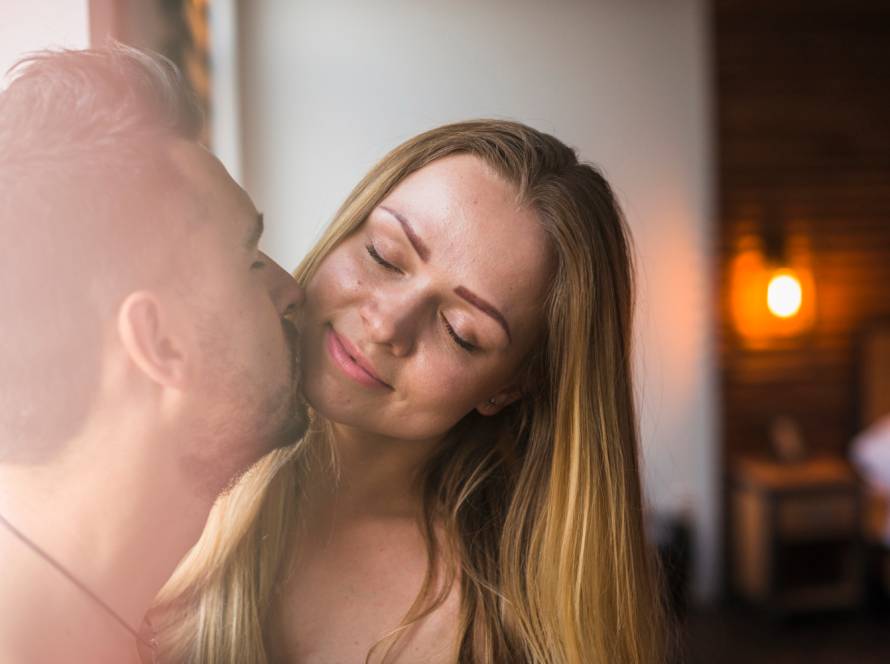
There is something about autumn that invites us to slow down.
The light begins to change, the days gradually get shorter, temperatures drop and, almost without noticing, we replace late afternoons spent outdoors with quieter moments at home. After months marked by holidays, travel, gatherings and long days, we return to schedules, responsibilities and a pace that can seem more demanding.
This change of environment can also reflect in how we feel. Some people experience a drop in energy or motivation, while others find in autumn an opportunity to regain a calmer rhythm and refocus on what was left aside during the summer months.
It is precisely in this context that we can talk about autumn and intimacy. Because the change of season does not only happen around us. It can also be an opportunity to look again at our body, our intimate wellness and the relationship we have with ourselves and those we love.
Why can autumn influence our motivation?
The arrival of autumn brings concrete changes to our daily life. Exposure to natural light decreases as the days become shorter and, simultaneously, schedules, activities and the amount of time we spend outdoors change.
For some people, these changes can translate into feelings of greater tiredness, lower energy or difficulty maintaining motivation. Moreover, when we return to a busier routine after summer, there can be a sense that the days no longer have space for what made us feel good.
Still, we should not interpret this experience as universal. Not everyone experiences a drop in motivation in autumn, and for many this season can precisely mean comfort, focus, creativity and renewal.
More than trying to fight the season, it may be interesting to understand what our body and mind are asking for at this time of year.
And what happens to sexual desire in autumn?
When we talk about sexual desire, it is tempting to look for a simple explanation for everything: the season changes, desire changes. In reality, the relationship is much more complex.
Desire does not depend only on temperature or the number of daylight hours. Stress, sleep, emotional state, self-esteem, the couple’s relationship, levels of tiredness, medication, hormonal changes and many other circumstances can influence how we experience our sexuality.
Therefore, there is no rule that autumn necessarily increases or decreases sexual desire. What can happen is that the change of pace typical of this season creates different conditions for intimacy.
With more time spent at home and fewer outdoor activities, some couples may find new opportunities to be together. On the other hand, the return to work, school and family responsibilities can increase tiredness and leave even less mental space for the relationship.
Ultimately, it is not so much the season that determines our intimacy. It is how we manage to adapt our life to what the new season brings us.
Autumn can be an opportunity to return to intimacy
After a summer full of activity, autumn can act as a kind of invitation to closeness.
The nights become longer, outdoor plans decrease and moments of greater quietness naturally arise. A leisurely meal, a conversation on the sofa, a massage or simply a few minutes without phones can become opportunities to reconnect.
Moreover, intimacy does not necessarily begin in the bedroom. Often, it starts much earlier, through how we communicate, touch, listen and pay attention to the person beside us.
For this reason, bringing the couple closer in autumn does not necessarily mean having more sex. It can mean creating more moments of connection, regaining touch, talking about what each person feels or simply looking at each other attentively again.
How to maintain motivation and well-being during autumn?
Finding a new rhythm can be one of the best ways to get through this seasonal change. Instead of trying to maintain exactly the same energy as in the summer months, we can adapt our routines and create small moments that contribute to well-being.
Maintaining some contact with natural light and the outdoors, for example, can help preserve a balanced routine. Likewise, rest, physical activity, proper nutrition and leisure moments continue to be important as the days get shorter.
On the other hand, it is also worth reserving space for activities that give us pleasure without necessarily having a productive purpose. Reading a book, taking a long bath, listening to music, cooking, chatting or simply doing nothing for a while are also legitimate ways to care for ourselves.
Self-care does not need to be just another task on the list. It can be precisely what allows us to step away, for a time, from the constant logic of obligations.
What if we started caring more for our intimacy?
When we think of self-care, we often remember skin, exercise, nutrition or rest. However, intimate wellness is also part of how we care for ourselves.
Getting to know our own body better, noticing changes in intimate comfort, seeking information, using appropriate products when necessary or simply allowing ourselves to explore what we enjoy are ways to develop a more conscious relationship with our sexuality.
During autumn, this care can take on an even calmer dimension. Instead of associating intimacy exclusively with spontaneity or intensity, we can see it as a space for presence, discovery and connection.
This is also where products such as lubricants, intimate moisturisers, massage oils, stimulators or couples’ games can be part of different experiences, chosen according to each person’s needs and preferences.
More important than the product itself is understanding what we are looking for when we choose it: comfort, discovery, closeness, pleasure or simply a different way to break the routine.
How to recover couple intimacy after summer?
The transition between summer and autumn can be a good moment to pause and look at the relationship.
Perhaps during the holidays you had more time together. Perhaps, on the contrary, you experienced such intense weeks that you returned even more tired. Whatever the experience, it is not necessary to wait for closeness to happen spontaneously.
One of the simplest ways to start is to recover small couple rituals. A dinner without television, a walk, a conversation before sleeping or a massage may seem like small gestures, but they help create moments when the relationship is no longer on autopilot.
Another possibility is to introduce something new. Trying a game for two, discovering a new massage technique or exploring an intimacy product can create a moment of shared curiosity.
Finally, it may be important to talk about desire again without turning that conversation into a demand. Asking “what would you like to experience more in this relationship?” can be much more important than asking “why don’t we do this anymore?”
Pleasure can also be part of a healthy routine
There is a tendency to think that a healthy routine is one where we manage to work, fulfil responsibilities, exercise and eat well. However, well-being is broader than a list of productive habits.
Having moments of pleasure, rest, connection and intimacy can also be part of a balanced life.
This does not mean that everyone needs to experience sexuality in the same way or that a relationship is only healthy when there is a certain frequency of sexual relations. Each person and each couple have different rhythms.
What matters is that there is space to communicate, to recognise needs and to live intimacy in a comfortable, consensual and pressure-free way.
Autumn can be an invitation to slow down
Perhaps this is one of the most beautiful things about this season: autumn reminds us that not everything needs to happen quickly.
Nature slows down, the days become more withdrawn and we ourselves can take advantage of this change to review priorities. Instead of constantly seeking more stimuli, we can return to paying attention to what we already have around us.
This includes the relationship with ourselves. It includes our body. It includes the person beside us.
And it also includes our intimacy.
Because sometimes, we don’t need to do more. We just need to be more present.
Perguntas frequentes sobre outono, desejo e intimidade
There is no universal rule. Sexual desire is influenced by various factors, including stress, sleep, emotional state, couple relationship, health, medication, and life context. Seasonal changes may coincide with shifts in mood and habits, but they do not determine sexual desire on their own.
Reduced exposure to natural light, changes in schedules, and a return to more demanding routines can contribute to changes in energy and mood for some people. If tiredness or mood changes are persistent or significantly interfere with daily life, it is important to seek advice from a healthcare professional.
Starting with small moments of connection can be more effective than setting expectations for major changes. Talking, restoring touch, setting aside time without distractions, and trying new activities together are some possibilities.
No. Intimacy can mean emotional closeness, conversation, affection, touch, kisses, massages, or simply sharing quality time. Each person and couple can define their own way of experiencing intimacy.
They can be a way to introduce novelty and curiosity into the relationship, provided they are chosen according to the preferences, comfort, and consent of all involved. Lubricants, massage oils, games, and other products can complement different intimate experiences.